Optum - RHRP document processor
How I cut analyst decision time by 33% on a federal document-processing AI platform
I designed dashboards and data visualizations that cut analyst decision time by 33% on a federal document-processing AI platform — so policy researchers could act on data instead of hunting for it.
View Case Study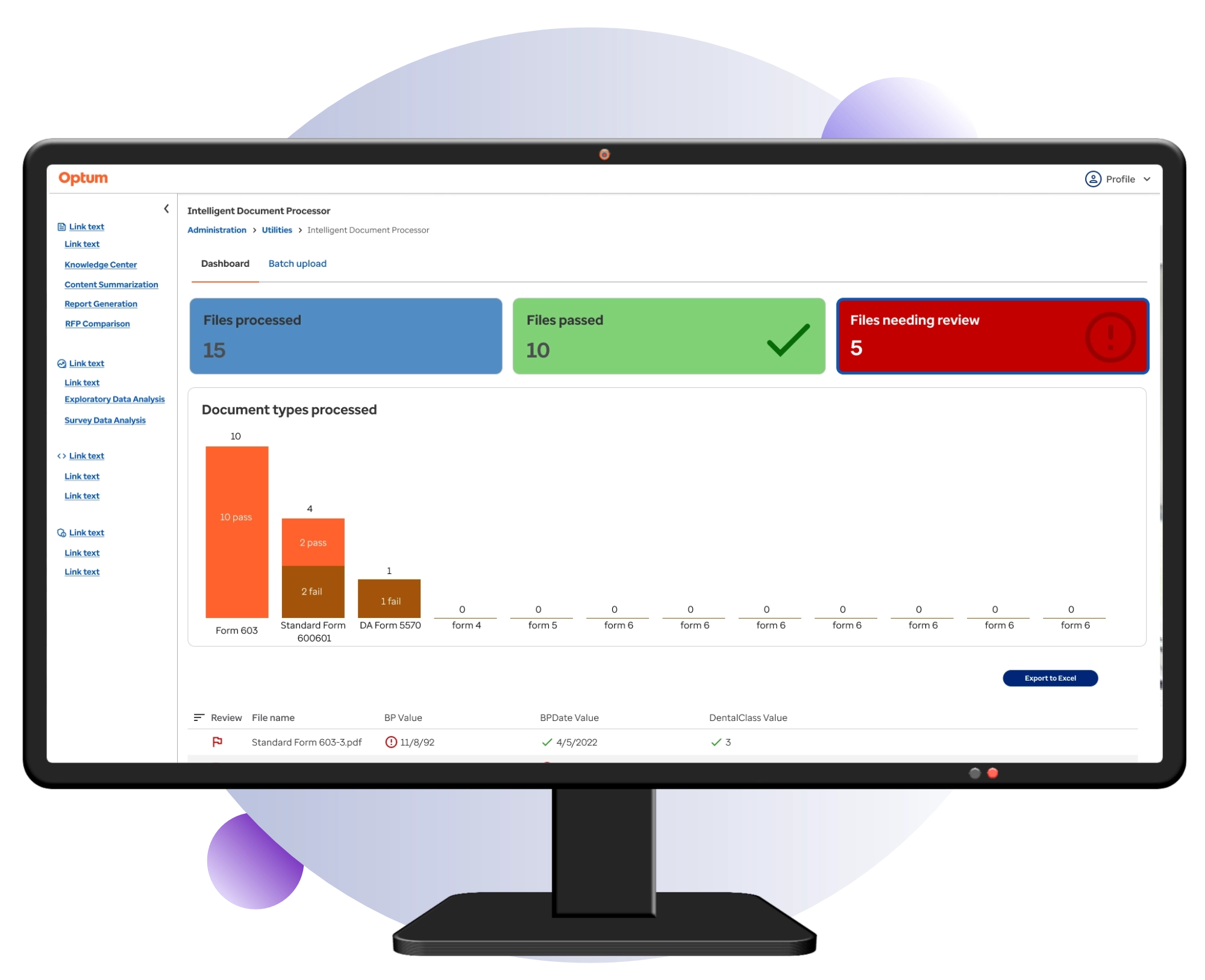
Optum - Project Ana
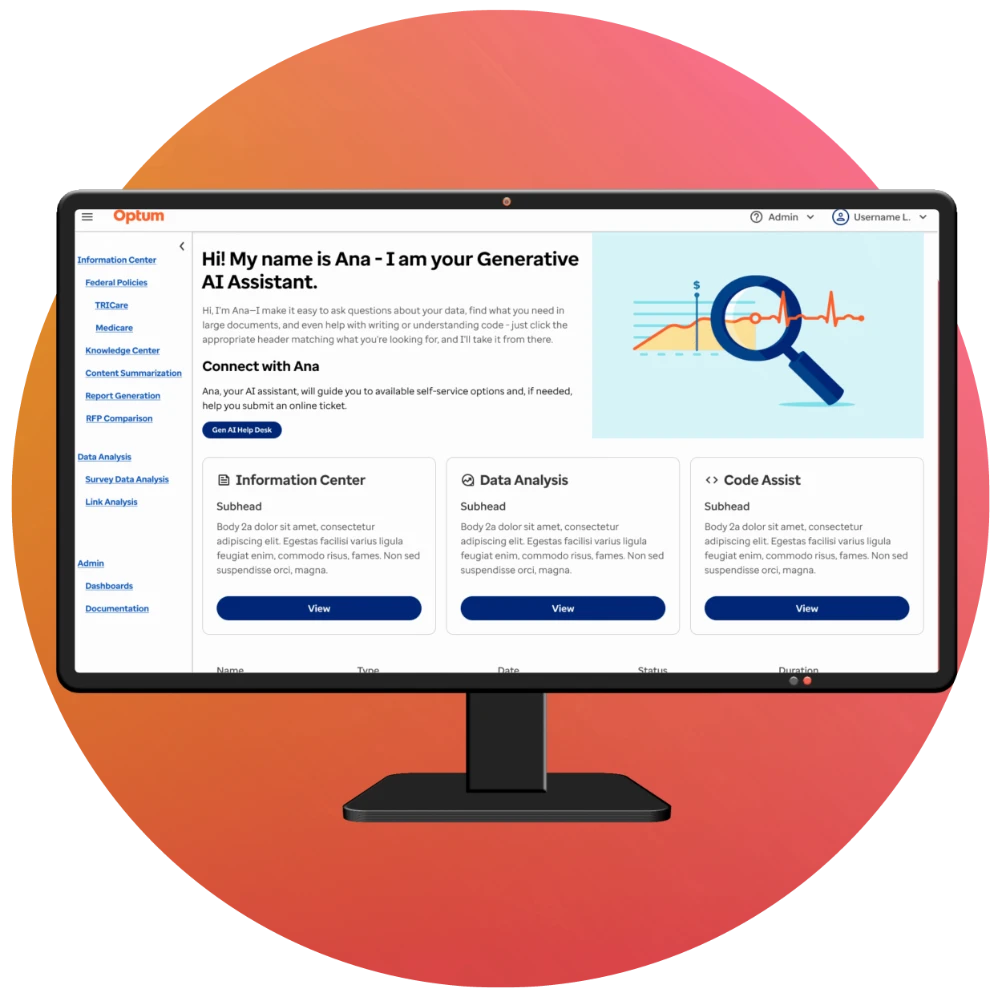
Turning raw federal data into faster decisions: a 0→1 AI platform for policy researchers and data scientists
I led 0→1 design on an AI platform for federal policy researchers and data scientists — turning raw federal data into faster decisions by integrating safety guardrails and WCAG accessibility.
View Case StudySky Solutions - SkyAI Application
Designing a federal AI assistant from 0→1 with safety guardrails and Section 508 compliance
I designed a federal AI assistant from 0→1 with safety guardrails and Section 508 compliance — giving Sky Solutions a modular, market-ready product they could pitch to government clients.
View Case Study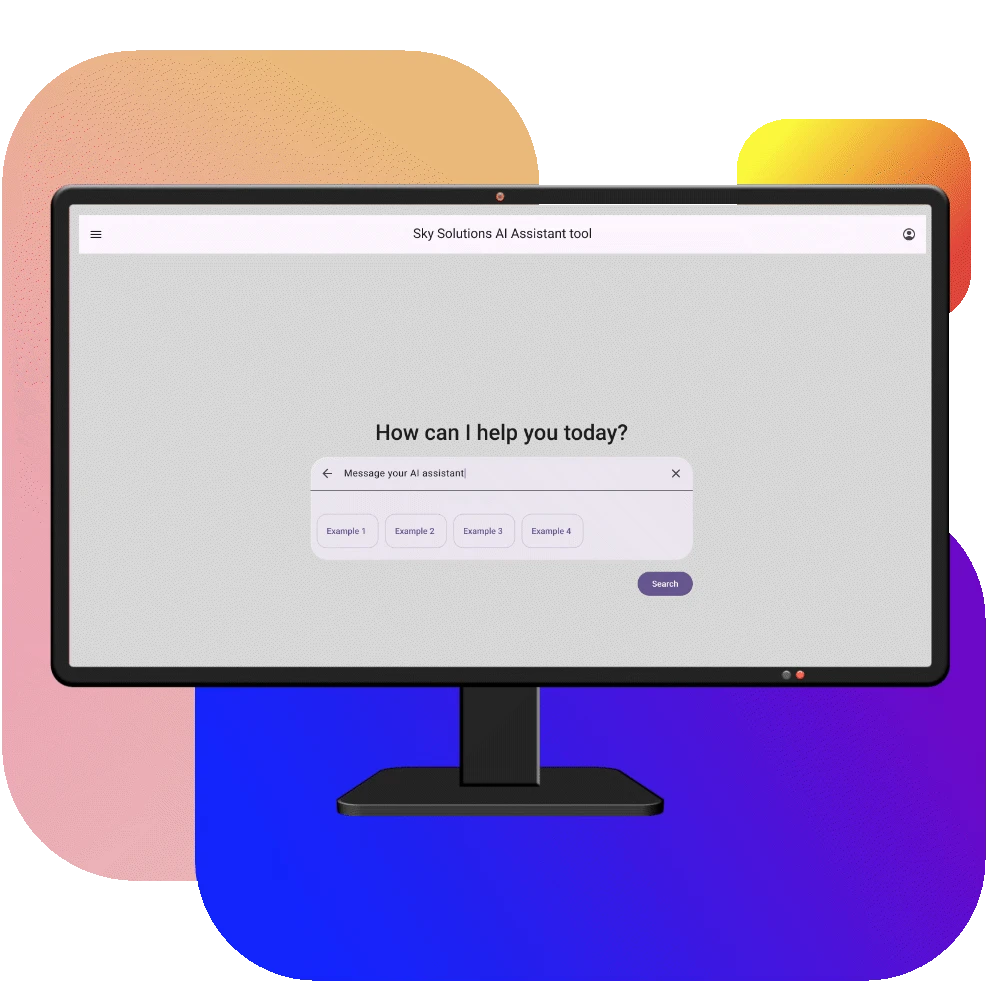
Subaru of America - warranty claim system
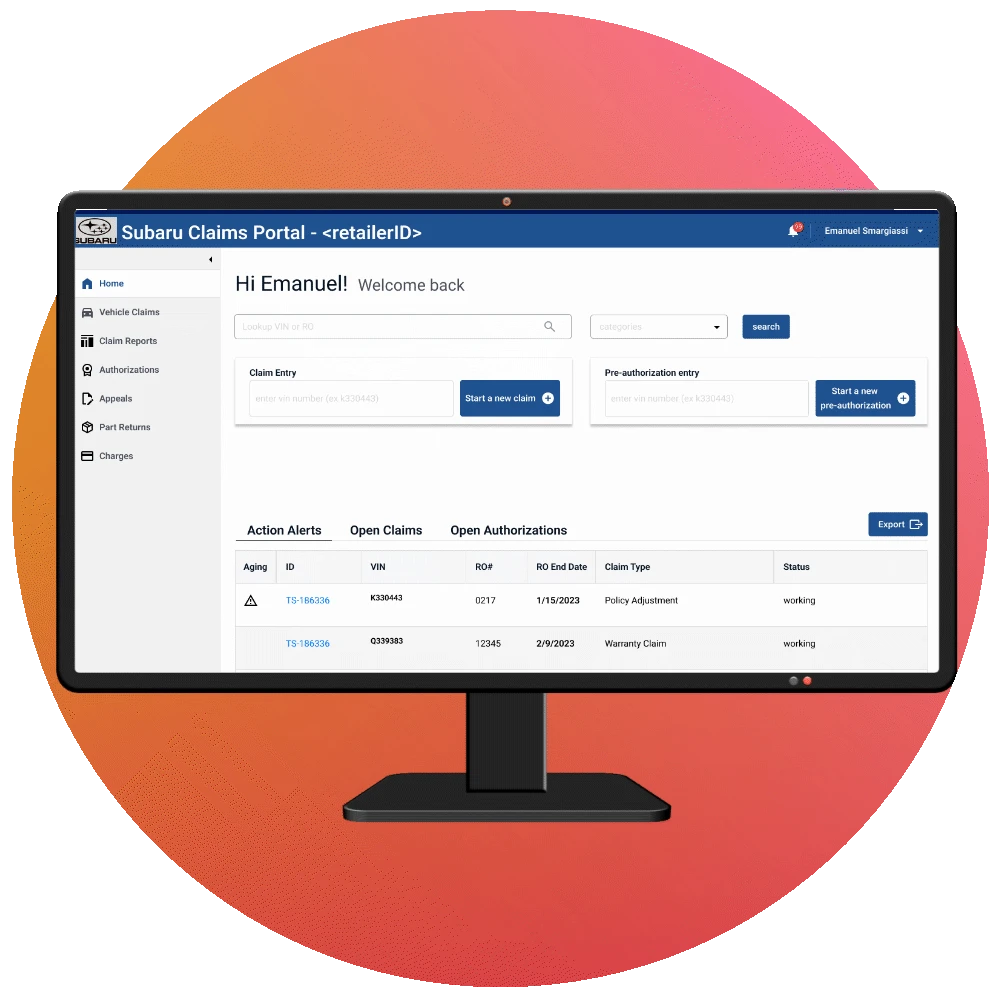
Redesigning warranty claims to cut processing time by 27% for dealership warranty administrators
Subaru of America (SoA) had an aging warranty system that their dealerships were utilizing. They needed an updated system built off of Angular and wanted to address certain usability concerns and make the system more seamless for the end user technicians.
Same problem, different domain: enterprise workflow software where a slow interface directly impacts customer experience and operational cost.
View Case StudyDuPont - MCI Semiconductor Insights
Helping semiconductor analysts spot production issues 33% faster through data visualization
The DuPont MCI Semiconductor Insights web application was created due to the difficulty that their semiconductor group had with gathering data needed to make integral business decisions. This application scraped data from the web and allowed users to manually upload data, at which point the system would generate data visualizations in the dashboard system for the end users. This allowed the analysts to make more informed choices more quickly.
Same problem, different domain: enterprise analytics where analysts need to spot issues and opportunities before costly delays pile up.
View Case Study